24 HOUR FIRE & WATER RESPONSE - 7 DAYS A WEEK


Mold After a House Fire: The Loss Nobody Warns About
It is the second bad surprise of a house fire: three or four weeks into the recovery, a musty smell in the hallway, fuzz on the baseboards in a bedroom the flames never reached, staining on a ceiling nobody was worried about. Mold after a fire is common enough that we treat it as a default risk on every fire scope, and the mechanism is simple once someone says it out loud: the fire department put the fire out with water, and the water did what water does.
A burned house is a perfect mold incubator
Count the conditions. Suppression water saturated materials across a footprint far larger than the burn. The structure is often open to weather through damaged roof or windows. Power is frequently off, so nothing is heating, cooling, or moving air. The family is displaced, so nobody is walking the rooms daily. And the recovery timeline runs weeks of estimates and adjuster visits while all of that sits. Mold needs moisture, still air, and time; a post-fire house supplies all three in quantity.
Where it starts, in the order we find it
Wet insulation leads, attic batts soaked by hose streams and wall cavities that took pressurized water hold moisture for weeks and grow mold invisibly. The carpet-and-pad layer follows, especially where furniture pinned wetness under it. Then the backs of drywall in the water's vertical path, closets and cavities where air never moves, and the contents boxed hastily into damp rooms. Almost none of this is visible from the middle of a room, which is why the moisture map matters more than the eyeball tour: readings define the wet inventory while it is still a drying problem, per Moisture Mapping.
| Mold needs | A post-fire house supplies |
|---|---|
| Moisture | Hundreds of gallons of suppression water in materials |
| Still air | Power off; no HVAC moving anything |
| Organic food | Wet drywall paper, framing, insulation, contents |
| Time undisturbed | Weeks of estimates while the family is displaced |
Prevention is a 72-hour decision
The window is the same one every water loss runs: colonization begins on saturated organic materials within days. The preventive sequence is extraction and structural drying started with the board-up, wet insulation removed rather than left to compost, and dehumidification running even while rebuild decisions wait, powered by temporary service if the house is dark. Families who authorize the drying scope in the first days routinely skip the remediation chapter entirely; the ones who wait for the full estimate to settle first almost never do. The combined pathway when the wait already happened runs through Mold After Water Damage.
Contents: the boxes are part of the problem
The fastest-moving mold in a post-fire house is often in the contents, not the structure: damp clothing packed hastily into bags, books and papers boxed wet, upholstered furniture stored in a humid garage while the house is worked on. Contents triage belongs in the first days, wet textiles to specialized laundering immediately, papers and photos to freeze-stabilization if they matter, furniture dried in moving air rather than stacked in plastic. A pack-out done wet is a storage unit full of mold with a monthly fee.
The smell test is not a clearance test
A house that stops smelling musty has not necessarily stopped growing mold; cavities off-gas intermittently, and cool weather suppresses the odor without touching the colony. The finish line is instrumented: moisture readings at reference on the materials that were wet, and where remediation ran, clearance verification behind it. Post-fire rebuilds that close walls on the smell test are how year-two mold discoveries happen, usually after the claim is settled and the leverage is gone.
If it has already appeared
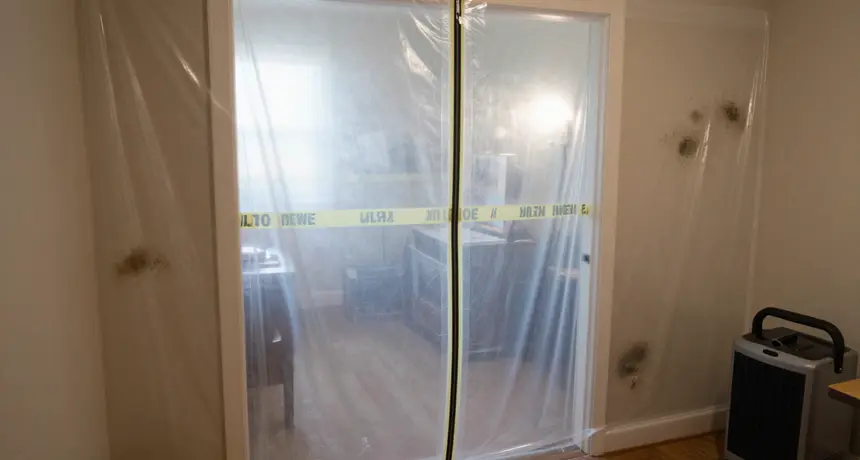
Established growth in a fire loss changes the order of operations: containment before airflow, because running drying equipment through a colonized structure seeds every clean room, then removal under negative air, then drying inside the same containment. On the claim side, mold resulting from the fire's suppression water generally belongs inside the fire claim, often under a policy mold sub-limit, and the causation evidence, the moisture path from the fire event to the growth, is what keeps it there. The older housing across Franconia and the region's other postwar communities, with its original plaster and dense framing, holds suppression water longest, which makes the early-drying decision worth the most exactly where the houses deserve saving most.
 24/7 EMERGENCY DISPATCH
Mold Showing Up After Your Fire?
Containment first, then drying, in that order. Call (703) 397-8315. Licensed & insured Virginia contractors · (703) 397-8315 · Fairfax City and Fairfax County