24 HOUR FIRE & WATER RESPONSE - 7 DAYS A WEEK


The Second Flood: What Suppression Leaves Behind
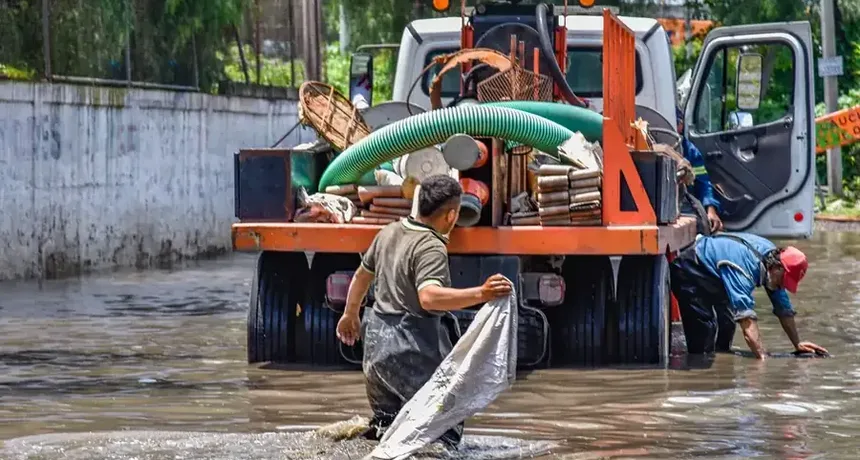
Firefighting works by drowning combustion, and the arithmetic is unforgiving: attack lines flowing well over a hundred gallons per minute, multiple lines on anything beyond a room-and-contents fire, and minutes to knock down what takes weeks to dry out. The water that saved the structure immediately becomes its own loss. It follows gravity down through the floor assemblies, loads insulation, wicks up the base of every wall it pools against, and soaks into subfloor and framing that were just stressed by heat. And it is not clean water: after moving through burned material, ash, and debris, suppression water is handled as contaminated, with the protective protocols and disposal handling that classification requires.
Fairfax Fire & Water Specialists runs extraction as part of the first fire-response visit, not as a follow-up appointment, because the water damage compounds by the hour while every other scope on a fire loss can tolerate a day. Dispatch answers at (703) 397-8315 day and night; the crew line is the same number, (703) 397-8315.
Tracing the Water Through a Fire-Damaged Structure
Suppression water hides better than plumbing losses do, because the visible pooling happens at the fire floor while the migration happens below it and inside assemblies. Water introduced at a second-story bedroom fire shows up in first-floor ceiling cavities, wall bases two rooms lateral of the fire, and the basement slab. Moisture mapping with thermal imaging and meter verification walks that whole gravity path, and the wet zone it defines is almost always larger than the burn zone. In Fairfax's older housing, with its plaster walls, board sheathing, and dense-framed floor assemblies, materials hold water longer and give it up more slowly than modern drywall construction, and the drying plan has to respect that.
Drying runs on the same IICRC S500-aligned discipline as any water loss: calculated equipment placement, sealed drying zones, and daily moisture readings at labeled points until every material class hits its reference standard. The added wrinkle on a fire loss is sequencing: drying equipment moves air, moving air redistributes soot, and running air movers through a heavily sooted space before surface stabilization smears deposits into everything. Our crews coordinate the extraction, soot stabilization, and drying phases so each one helps rather than sabotages the next. The full methodology lives on Structural Drying & Dehumidification and Moisture Mapping.
The Mold Clock Runs Faster After a Fire
Mold needs moisture, organic material, and time, and a fire-damaged structure supplies the first two in abundance: saturated framing and drywall, plus a fresh layer of organic combustion residue that colonization feeds on readily. In warm months the window before visible growth can be measured in days, and a structure that sits wet while the fire claim gets organized routinely adds a mold remediation scope to what was already an expensive loss. Extraction inside the first day and verified drying are the whole prevention strategy. Where the timeline already slipped before we arrived, the remediation path is covered under Mold After Water Damage.
One Loss, Two Scopes, One File
Insurance treats the fire and the water as components of the same covered event, but they are scoped and estimated separately, and the water side needs its own evidence: moisture maps at baseline, the drying log with daily readings, and material disposition records for what was dried in place versus removed. Fire claims that arrive with a complete water file settle faster and reopen less, because delayed moisture problems, the buckled floor in March after a November fire, are exactly what a documented dry-out prevents and, failing that, proves. We produce the water file alongside the fire file from the same first visit, under Fire Damage Restoration.
 COMMON QUESTIONS
Frequently Asked Questions
More questions? Call (703) 397-8315, answered around the clock.
24/7 EMERGENCY DISPATCH
Fire's Out. The Water Is Still Working
Call (703) 397-8315 for same-day suppression water extraction across Fairfax City and Fairfax County. The mold clock does not wait for adjusters. Licensed & insured Virginia contractors · (703) 397-8315 · Fairfax City and Fairfax County