24 HOUR FIRE & WATER RESPONSE - 7 DAYS A WEEK


What Black Mold Actually Is, Minus the Panic
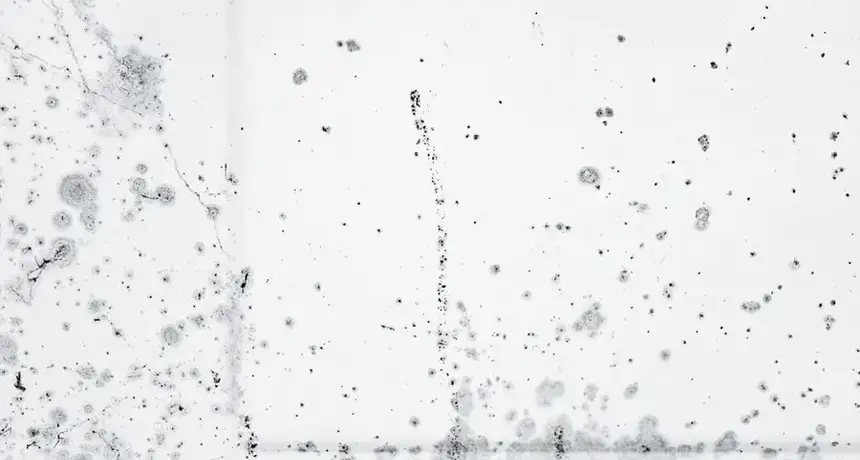
Black mold in common usage means Stachybotrys chartarum, the slow-growing, dark, slimy-when-wet species that colonizes chronically saturated cellulose, the paper facing of drywall, ceiling tile, wood that stayed wet for weeks. Two honest corrections to the folklore around it: plenty of dark-colored molds are not Stachybotrys, so color alone identifies nothing, and the health science supports treating all substantial indoor mold growth as a problem to remove rather than ranking species into monsters and harmless ones. What genuinely distinguishes Stachybotrys is what it indicates: it does not grow on a splash or a humid week. Finding it means a material stayed soaked for a long time, which means a moisture problem with history, and usually more growth than the visible patch.
Suspected black mold gets assessed through (703) 397-8315 with sampling available where identification changes the plan; the line is (703) 397-8315.
Removal Under Heightened Discipline
The protocol is the full remediation standard applied without shortcuts: sealed containment under negative pressure, HEPA filtration running wall to wall, suited and respiratored technicians, colonized porous materials cut out and bagged in place, and no dry disturbance of growth at any point, since heavily colonized Stachybotrys material releases its load when handled carelessly. Because the species indicates long-term saturation, the scope investigation goes deeper by default: cavities behind the visible growth get opened, adjacent bays get scoped, and the moisture history gets mapped, with the instrumented approach at Moisture Mapping and the full protocol framework at Mold Remediation.
The Long-Wet Question the Species Forces
Stachybotrys is a symptom of duration, so the source hunt asks harder questions: the slow leak nobody found, covered at Hidden Mold Detection; the chronic seepage pattern at Groundwater Seepage Flooding; the unnoticed loss in a vacant period under Unattended Home Water Damage. On coverage, the same duration works against the claim, long-term moisture leans toward exclusion, unless the originating event was sudden and documentable, which is exactly the evidence our assessment works to establish before the carrier asks.
 COMMON QUESTIONS
Frequently Asked Questions
More questions? Call (703) 397-8315, answered around the clock.
24/7 EMERGENCY DISPATCH
Dark Growth Spreading in Your Fairfax Home?
It marks a long-wet problem. Call (703) 397-8315 for contained removal and the moisture answer behind it. Licensed & insured Virginia contractors · (703) 397-8315 · Fairfax City and Fairfax County