24 HOUR FIRE & WATER RESPONSE - 7 DAYS A WEEK


Grease and Protein Residue Play by Different Rules
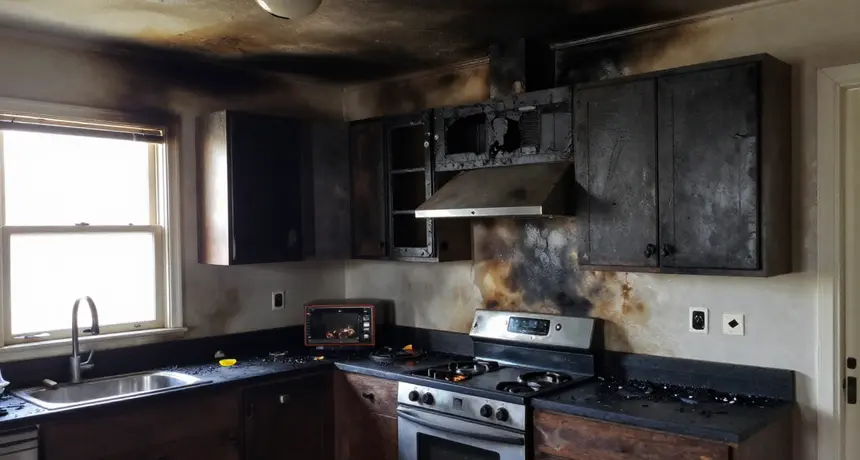
Kitchen fires dominate residential fire statistics nationally, and the pattern holds across Fairfax's housing stock, from rambler galley kitchens to open-plan townhome layouts where nothing separates the range from the living space. What makes these losses technically distinct is the fuel. A grease flare deposits an aerosolized fat film that rides heat currents well beyond the visible burn, and an oven or stovetop event that burned food produces protein residue: a nearly invisible film with a penetrating odor that clings to paint, cabinet interiors, and every surface the air touched while it cooked. Homeowners routinely scrub a kitchen spotless and cannot understand why the smell survives. The film is still there; it just does not photograph.
Fairfax Fire & Water Specialists scopes kitchen losses in three layers: the burn zone at the range and cabinet line, the grease and protein film across the kitchen and adjoining rooms, and the odor load in the HVAC and soft goods. The line for kitchen losses is ' + PHONEF + ', and the same ' + PHONEF + ' books non-emergency assessments.
The Cabinet Line Decision
Cabinets take the concentrated heat in most kitchen fires, and the clean-or-replace call is rarely obvious from the outside. Thermoplastic-faced boxes warp and delaminate at temperatures that leave solid wood faces intact, melamine interiors absorb grease film into their seams, and the wall cavities behind a burned run can hide charring the doors conceal. We open and document what the heat reached before the estimate is written, because a cabinet run replaced twice, once cosmetically and again when the hidden damage surfaces, is the most common way kitchen claims reopen.
Appliances get individual dispositions: units in the direct heat zone are documented losses, while smoke-exposed units outside it usually recover with residue cleaning and odor treatment. The range hood and its duct always join the scope, since the exhaust path concentrated everything the fire produced.
Beyond the Kitchen
Open floor plans carry kitchen smoke through the main level in minutes, and stairwells lift it to bedrooms. The residue mapping that defines the cleanup follows the airflow, not the room boundaries, and treatment for protein odor leans on enzyme and oxidation chemistry rather than the standard smoke deodorants that fail against it. Where the fire was suppressed with an extinguisher, the dry-chemical powder becomes its own cleanup line: corrosive, respirable, and driven into every gap the discharge reached. The broader smoke and odor methodology lives on Smoke Damage Cleanup and Smoke Odor Removal, and suppression-water scopes route through Firefighting Water Cleanup.
 COMMON QUESTIONS
Frequently Asked Questions
More questions? Call (703) 397-8315, answered around the clock.
24/7 EMERGENCY DISPATCH
Kitchen Fire in Your Fairfax Home?
Grease and protein residue set fast. Call (703) 397-8315 before household cleaning makes the film permanent. Licensed & insured Virginia contractors · (703) 397-8315 · Fairfax City and Fairfax County