24 HOUR FIRE & WATER RESPONSE - 7 DAYS A WEEK


What Actually Starts House Fires Here
Ask people what causes house fires and they guess candles, smoking, kids with matches. The national fire-service data says otherwise, and Fairfax's particular mix of housing eras bends the list further. Knowing which fire your house is most likely to have is the start of preventing it, and of recognizing the aftermath when it happens anyway.
Proportions reflect national fire-service reporting; shares shown qualitatively.
Cooking, by a landslide
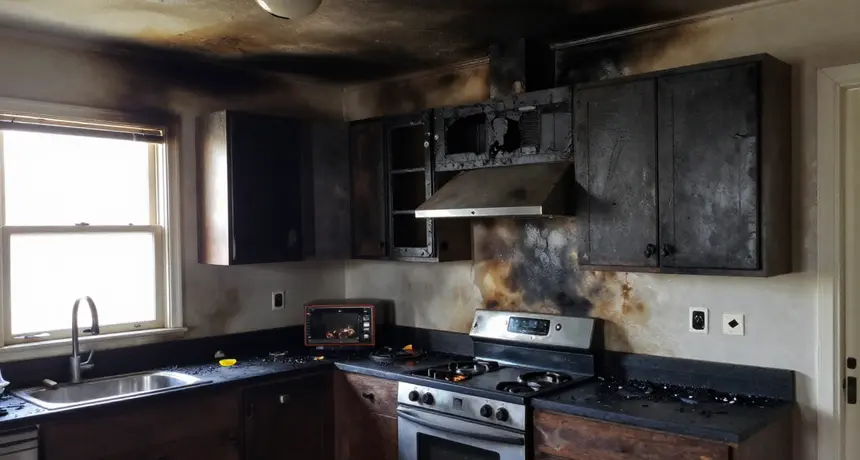
Roughly half of home structure fires start in the kitchen, and the profile is unattended cooking, a pan of oil left for two minutes, a burner assumed to be off. The damage signature is distinctive: intense localized burn at the range, grease and protein residues that ride smoke through the whole floor, and odor that outlasts the visible cleanup by months when it is treated like ordinary soot. That chemistry is why kitchen events get their own protocol at Kitchen Fire Cleanup.
Heating: Fairfax's second season
Heating equipment holds second place nationally, and this region's older stock gives it extra weight: oil-heritage burners that puff back, original masonry flues carrying decades of creosote, space heaters doing jobs the aging central plant cannot. It is the reason our winters run a dual peak, heating-system fire events and freeze losses arriving in the same cold snaps, and the reason neighborhoods with 1950s systems see the fire types newer communities never do.
Electrical: the era-dependent third
Electrical distribution fires track the housing generation almost perfectly: fuse-era panels and cloth-insulated wiring in the earliest postwar blocks, the aluminum branch-wiring window in the mid-60s through 70s, overloaded circuits everywhere renovation added demand without adding capacity. These fires start inside cavities and give quiet warnings first, warm plates, flickers, that fishy smell, which makes them the most preventable entry on the list and the most damaging when the warning goes unread, per Electrical Fire Damage.
What each cause leaves behind, and why it changes the cleanup
Cause is not trivia after the fact; it writes the restoration scope. Cooking fires leave protein and grease residues that ordinary soot methods smear and ordinary deodorizing cannot touch. Heating events split by fuel: oil puffbacks deposit petroleum soot that sets permanently under a wet rag, while flue fires leave their damage inside the chimney where only a camera finds it. Electrical fires concentrate their destruction inside wall cavities, so the visible room often understates the loss by a full order. Matching method to residue chemistry is most of what separates professional fire cleanup from a hard week of scrubbing that makes things worse.
The winter multiplier
Fairfax's fire calendar is not flat. Cold snaps push heating equipment to maximum duty exactly when kitchens are busiest and space heaters come out of closets, and the same weeks freeze pipes, which is why our winter board runs fire and water losses off the same storms. Households that winterize on both fronts, burner service and flue sweep on one list, pipe insulation and vacation shutoffs on the other, are playing the season the way the data says it actually arrives.
The remainder, and the pattern that matters
Dryers and their lint-loaded ducts, candles, smoking materials, and children's experiments fill out the list, each small nationally and vivid locally when it is your laundry room. The pattern worth keeping: the leading causes are all routine-household-equipment causes, which means the fires are calendar-preventable, burner attention, annual flue sweeps, duct cleanouts, electrician visits for the warnings. Homes across Burke and every community we serve run the same odds; the housing era just picks which line item runs hottest. And when prevention loses one anyway, the full recovery, burn, smoke, soot, and the water that put it out, runs through Fire Damage Restoration.
 24/7 EMERGENCY DISPATCH
A Fire Found Your Fairfax Home?
All four losses scoped together. Call (703) 397-8315. Licensed & insured Virginia contractors · (703) 397-8315 · Fairfax City and Fairfax County