24 HOUR FIRE & WATER RESPONSE - 7 DAYS A WEEK


Why the Smoke Smell Still Won't Go Away
Every week someone in our service area describes the same sequence: professional carpet cleaning, two coats of paint, weeks of open windows, and the smoke smell still walks back into the room every humid afternoon. The pattern is so consistent because the approach misunderstands what odor is. You cannot clean away a smell whose source you have not removed.
Smoke, soot, and odor are three different problems
The words get used interchangeably and the confusion costs people months. Smoke damage is the staining and residue path the hot gases took. Soot is the acidic particulate they left behind. Odor is neither of those: it is volatile molecules that soaked into porous materials while the air was saturated, and it re-releases whenever temperature or humidity rises, which is exactly why the smell is worse on rainy days and every time the heat kicks on.
| Problem | What it actually is | Where it hides | The wrong move | The right move |
|---|---|---|---|---|
| Smoke damage | Hot gases and particulates that traveled and cooled | Upper walls, closets, HVAC ducts, rooms far from the fire | Painting over it | Residue mapping, then surface-specific cleaning before any primer |
| Soot | Acidic carbon residue; oily (grease/oil fires) or dry (fast hot fires) | Every horizontal surface, electronics, metal fixtures, behind cabinet doors | Wet-wiping it | Dry-sponge lifting first; chemistry matched to residue type |
| Odor | Volatile molecules absorbed INTO porous materials | Insulation, carpet pad, unsealed wood, duct liner, wall cavities | Candles, sprays, ozone rentals | Remove the reservoirs, then thermal fog or hydroxyl treatment |
That last row is where do-it-yourself efforts die. Surface cleaning removes surface residue; the odor reservoirs, insulation above the ceiling, the pad under the carpet, the unsealed framing inside walls, sit untouched behind everything you scrubbed.
The reservoir list, in the order we usually find them
Attic and wall insulation absorbs smoke like a filter and never releases it on its own. Carpet pad holds odor even after the carpet above it cleans up. HVAC duct interiors, especially lined ducts, got a full smoke charge if the system ran during the fire, and redistribute it every cycle afterward. Unsealed wood, framing, subfloor, the backs of cabinets, absorbs deeply and off-gasses for years. Even the wax on a hardwood floor can hold enough odor to keep a room smelling like the fire.
What removal actually looks like
The professional sequence is subtraction before treatment: identify the loaded materials with an inspection that includes the cavities, remove what cannot release its load, insulation out, pad out, duct liner replaced, seal what stays with products built for the job rather than wall paint, and then treat the air volume with thermal fogging or hydroxyl generators that chase the molecules into the same pores the smoke used. The full protocol lives at Smoke Odor Removal, and where residue is still present, cleaning precedes it through Soot Removal.
Why ozone rentals and bombs keep disappointing people
The rental ozone generator deserves its own paragraph because it is the most common last attempt before people call us. Ozone does oxidize odor molecules, in the air and on surfaces it reaches, and that is the limitation in one sentence: it treats what it touches, and the reservoirs are inside materials it cannot enter at meaningful depth. Run one in a room with loaded insulation above the ceiling and you get a house that smells like ozone for a week, then like smoke again the first humid afternoon. Ozone also degrades rubber, elastics, and some finishes, and the space cannot be occupied during treatment. Professionals use oxidizing treatments too, hydroxyl generators that are safe for occupied spaces, ozone in controlled chamber applications for contents, but always after source removal, never instead of it.
The HVAC loop that re-contaminates cleaned rooms
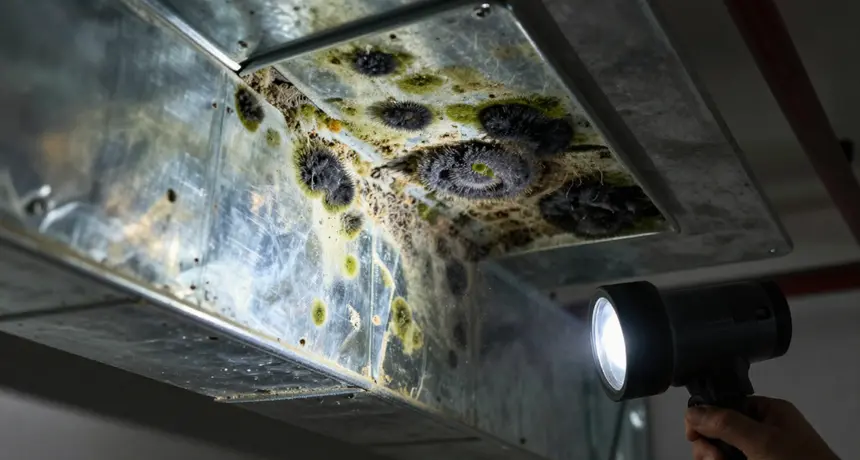
One reservoir deserves special attention because it undoes everything else: the duct system. If the air handler ran during or after the fire, the return side pulled smoke through the equipment and every duct run, and lined ducts absorbed it. Every heating or cooling cycle afterward washes air over that loaded liner and delivers a low dose of fire smell to every room, including the ones you just paid to clean. Duct inspection belongs in every serious odor scope, and the answer ranges from negative-air duct cleaning to liner replacement depending on what the camera finds.
When to call a Fairfax pro instead of buying another gadget
If the smell has survived two honest cleaning rounds, it is in the reservoirs, and no consumer device reaches them. This is especially true in the 1950s-60s housing across Annandale and the City of Fairfax, where decades of unsealed wood and original insulation give odor more storage than newer construction. An assessment that names the loaded materials turns an endless fight into a finite scope, and the finite scope is nearly always smaller than another year of candles.
 24/7 EMERGENCY DISPATCH
Smell Still There After Everything?
It is in the reservoirs. Call (703) 397-8315 for the assessment that names them. Licensed & insured Virginia contractors · (703) 397-8315 · Fairfax City and Fairfax County