24 HOUR FIRE & WATER RESPONSE - 7 DAYS A WEEK


Soot Starts a Chemical Attack the Moment It Lands
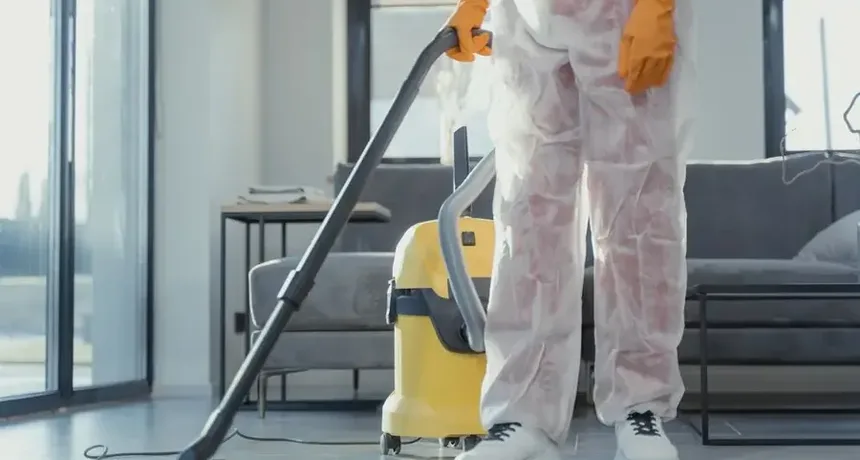
What settles out of combustion smoke is a particulate load carrying sulfur and chlorine compounds that turn acidic on contact with normal indoor humidity. From that moment the deposit is not passive: it tarnishes chrome within a day, pits aluminum window frames within two or three, eats into brass and copper finishes, clouds glass through micro-etching, and bonds progressively with paint films until removal means repainting. Soot removal is a race against reaction chemistry, which is why it holds a different priority in the fire response than the broader residue cleanup: neutralization on vulnerable surfaces happens in the first visit, before the room-by-room cleaning campaign begins.
Fairfax Fire & Water Specialists treats soot by source chemistry, because what burned determines what removes it. Wood and paper fires drop dry, carbon-heavy soot that responds to dry mechanical removal. Burning plastics and synthetics, which dominate modern furnishings, produce a smeary, chemically aggressive deposit that demands wet chemistry matched to the surface underneath. And oil-combustion soot, Fairfax's specialty, is a category of its own. The direct line is (703) 397-8315; crews stage from Fairfax Boulevard and (703) 397-8315 starts them moving.
Oil Soot: The Deposit Fairfax's Heating Systems Produce
A meaningful share of Fairfax's post-war housing still heats with oil-fired furnaces and boilers, and when one of those burners misfires into a puffback, it charges the house with petroleum-based soot that behaves like nothing else in the restoration field. Oil soot is an aerosolized fuel residue: greasy, adherent, and loaded with an acrid petroleum odor. Approach it with the dry sponges that handle wood-fire soot and it smears into a stain. Approach it with household degreaser and it spreads while the underlying finish absorbs the oil. The working protocol is solvent-based pre-conditioning applied before any contact cleaning, then systematic top-down removal, then HEPA filtration running throughout to control the airborne fraction.
Puffback losses are whole-house soot events when the home has forced-air distribution, because the ductwork delivers the blast to every register. The full puffback response, including the HVAC scope and burner-side coordination, has its own page: Furnace Puffback Cleanup. Chimney flue fires produce a related creosote-heavy deposit covered under Chimney Fire Damage.
The 48-Hour Corrosion Window
Metal surfaces set the response clock. Chrome bathroom fixtures show permanent tarnish inside 24 hours of acidic soot contact. Brass hardware and copper fixtures follow. Aluminum frames pit over the first week. Appliance finishes, electronics contacts, and the interior of the electrical panel itself all sit on the same timeline. Once etching begins, cleaning stops further loss but cannot restore the surface; the difference between a cleaned fixture and a replaced one is usually the response time, not the technique.
Our first-visit protocol prioritizes those clock-driven surfaces: photograph, then neutralize with pH-appropriate treatment, then log each item as preserved or already progressing to permanent damage. That log feeds the claim directly, since items that were already corroding at first contact are replacement line items with the evidence attached.
Porous Surfaces and the Clean-or-Replace Call
Soot that lands on sealed surfaces stays where cleaning can reach it. Soot that lands on raw wood, unsealed masonry, paper-faced drywall, carpet, or the original plaster in Fairfax's older housing penetrates below any cleanable depth, where it keeps releasing acid compounds and odor indefinitely. Every porous material in the affected zone gets a penetration assessment, and the clean-or-replace call weighs extraction cost against replacement cost with the homeowner and adjuster seeing the same evidence. In Old Town Fairfax's historic structures, where original material is irreplaceable, that calculus shifts toward specialized conservation-grade cleaning, and we scope it accordingly.
 COMMON QUESTIONS
Frequently Asked Questions
More questions? Call (703) 397-8315, answered around the clock.
24/7 EMERGENCY DISPATCH
Soot on Your Surfaces Right Now?
The corrosion clock started when it landed. Call (703) 397-8315 for same-day neutralization on the surfaces that cannot wait. Licensed & insured Virginia contractors · (703) 397-8315 · Fairfax City and Fairfax County